A single orchard can contain over a million tiny buds, each with the potential to become a flower and later a fruit. Every stage, from bud to bloom to fruit, requires careful, hands-on work that can be slow and often imprecise when done on a large scale. Because growers don’t have exact data or maps showing where and how many buds, flowers, or fruitlets there are, they must rely on guesswork. This means pollination may use too much expensive pollen, workers spend extra time thinning, and the final fruit can vary widely in size and quality, especially for export markets. What if technology could make orchards visible and measurable, turning guesswork into precision?
Meet the founders, Dr Shujjat Khan and Dr Jibran Tahir of AIWorx, one of the ventures participating in the Sprout Accelerator Spring25 Cohort, who are tackling this problem by working on an intelligent, precise solution for future horticulture.
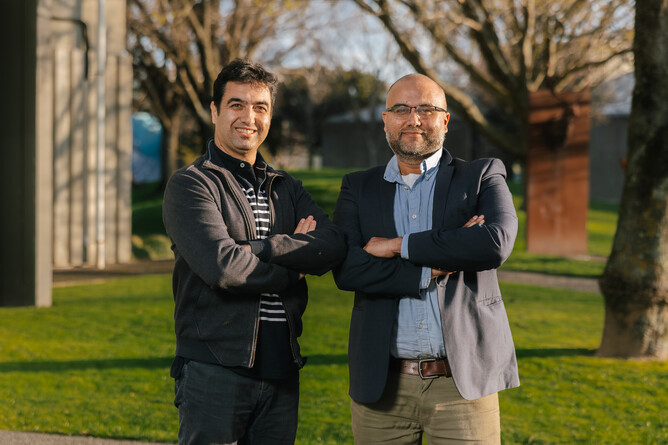
The venture was born out of a conversation in 2022 between two old friends who first met more than 15 years ago at Massey University. Jibran, a plant biologist, often wondered why so much precious pollen was wasted in kiwifruit orchards when nature needs only a small touch to create life. Shujjat, a robotics and AI expert, had spent years designing machines that could see and act with precision, even teaching robots to clean a cow’s udder at just the right spot. As they talked, something clicked. They realised that if nature and technology could work together, the way they did, many of horticulture’s toughest challenges could be solved. The moment Jibran saw Shujjat’s AI accurately map the flowers across an orchard, he knew their idea had moved from imagination to reality.
AIWorx has developed a Floral AI Platform - a system that enables what was once invisible. It performs real-time digitisation and geo-spatial mapping of buds, flowers, fruitlets, and fruits across an orchard showing where life is forming and how it changes over time.
Using cameras and smart algorithms, the system scans each row and generates heat maps that reveal the density and precise location of floral elements. With this knowledge, growers can focus their efforts only where needed; thinning or pollinating precisely, instead of guessing. The result is less labour, less waste, and more care where it truly matters.The platform is plug-and-play, easy to mount on orchard vehicles like a Kubota, and sends all the information to a personal dashboard that helps growers track their orchard’s growth like never before. Built to adapt to any design, from wide kiwifruit canopies to apple trees, it brings together nature’s patterns and human insight in perfect harmony.
The team’s first major milestone is to scale up production of the Floral AI Platform for scanning kiwifruit and apple orchards. But that’s only the beginning.
The next step is developing intelligent hands of the system to automate key orchard operations; the first of which is the AI-Pollinator, a guided pollen delivery system that targets flower clusters with precision. Integrated with the Floral AI Platform, it will enable precision pollination, conserving expensive pollen and reducing variability in fruit quality. In time, other orchard tasks, like thinning and girdling, will also become automated. Step by step, the team’s vision is to turn labour-heavy work into precise, thoughtful actions, allowing growers to focus more on nurturing their orchards and less on repetitive tasks.
Beyond the business, AIWorx’s ultimate aspiration is to bridge the gap between horticulture and AI by digitising farms and creating a valuable repository of orchard data that helps not only farmers and scientists, but the entire ecosystem that depends on them. For Shujjat and Jibran, success isn’t measured only in machines built or milestones reached. It’s about creating something that lasts: a smarter, kinder way to grow food that supports people and the Earth for generations to come.